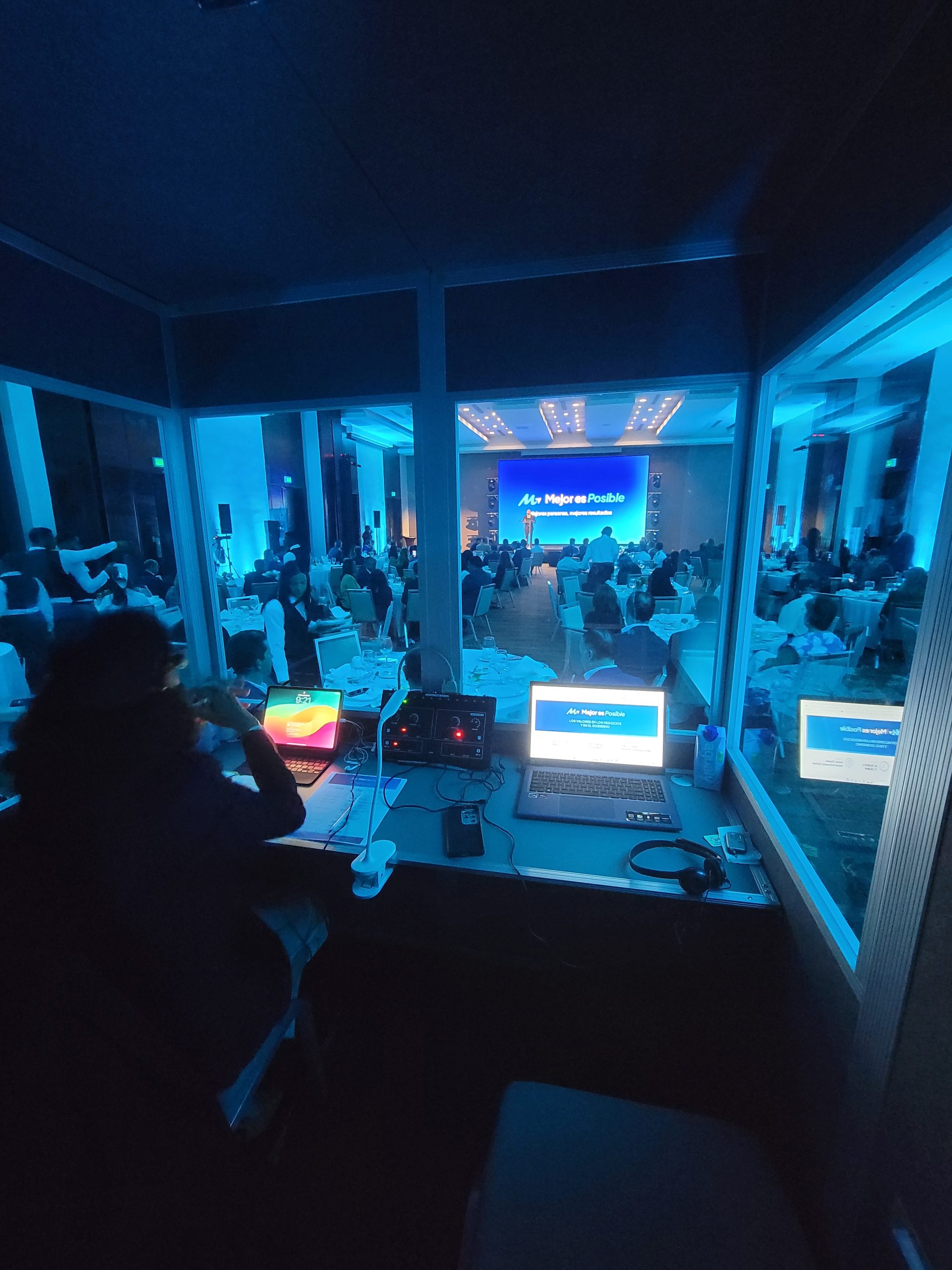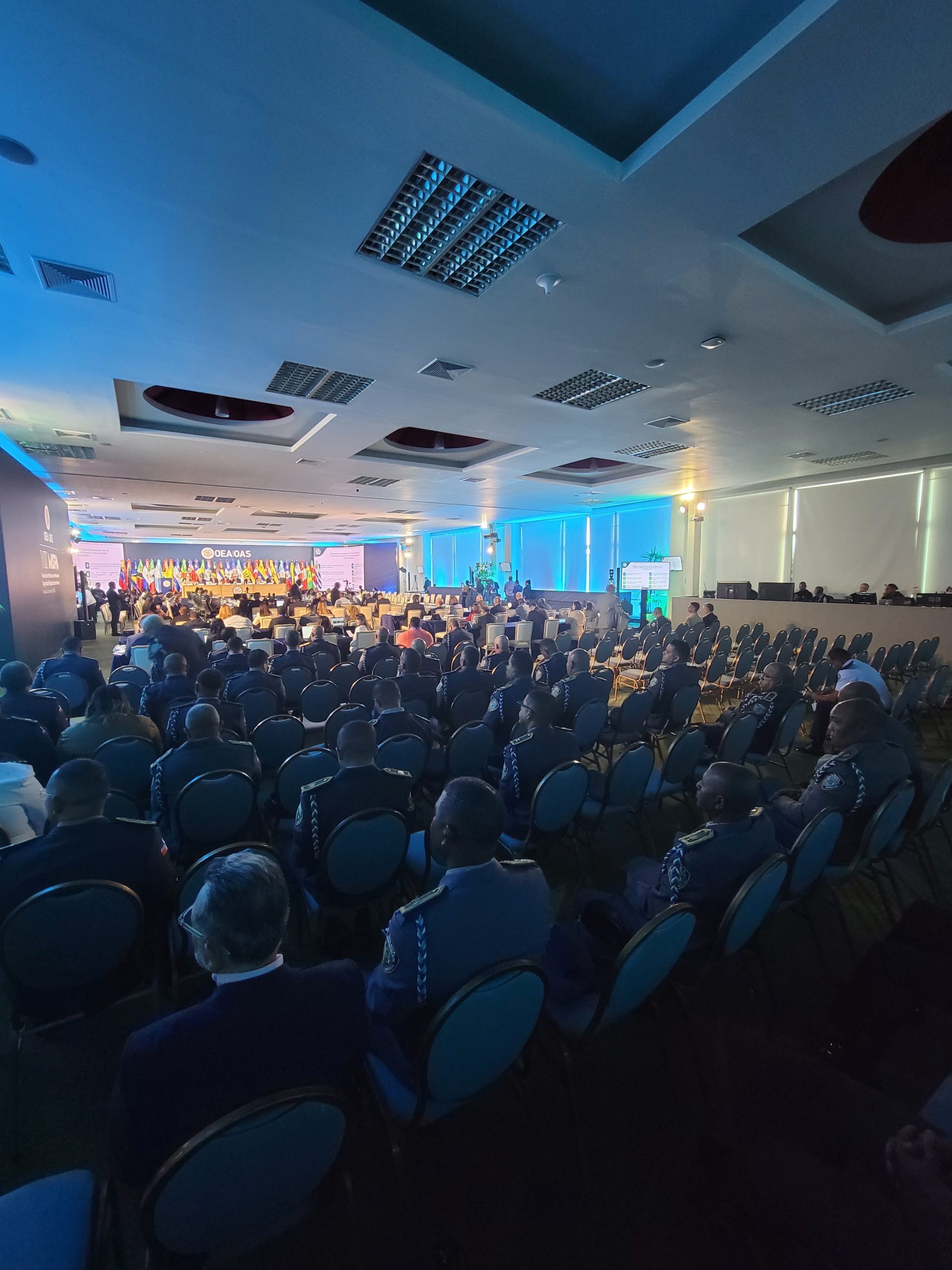
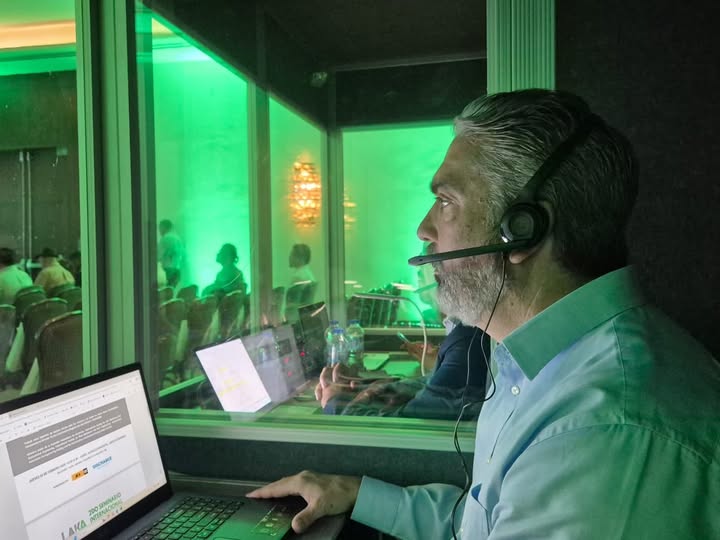
No one sees what happens behind the microphone.
As a conference unfolds, as agreements are signed and ideas cross borders, there is a mind working at its limit. Listening, understanding, feeling, and transforming every word in real time. Without pause. With no margin for error. Only precision, responsibility, and absolute dedication. Ensuring that the experience of those listening to the interpretation is identical to that of those listening in the original language. Rising to the speaker’s level, without ever letting the speaker descend. After all, the audience listens to the interpreter, not the speaker. Consequently, speakers can only be as good as their interpreters. Never better.
Interpreting is not just a job; it is a vocation that demands mental resilience, cultural affinity, contextual understanding, human sensitivity, and constant preparation. It means carrying, feeling, and conveying the emotions of others, sustaining critical conversations, and remaining steadfast, making the pressure invisible to everyone.
Thanks to top-tier interpreters, the Dominican Republic not only hosts international events—it positions itself as a destination capable of hosting world-class conferences. Their professionalism, ethics, and excellence turn every multilingual gathering into a seamless, reliable, and truly global experience.
Because when interpretation is of high quality, the world understands better… and the Dominican Republic moves forward with it. In the Dominican Republic, the demand for professional interpreting services has grown significantly due to the country’s role as a hub for international tourism, foreign investment, medical tourism, diplomacy, and multinational business operations. From conferences in Santo Domingo to corporate events in Punta Cana and legal proceedings involving international stakeholders, interpreters are essential to ensuring effective multilingual communication.
Despite the importance of this role, interpreting remains one of the most cognitively demanding and emotionally intense professions. Unlike translation, which allows time for revision, interpreting requires real‑time performance. Interpreters must listen, process meaning, analyze context, and deliver accurate communication instantly. This simultaneous mental processing creates a continuous cognitive load that can lead to fatigue, stress, and high-pressure during assignments.
In the Dominican market, interpreters often face additional challenges such as long working hours during multi‑day conferences, high expectations from international clients, last‑minute logistical changes, and the need to adapt to diverse sectors including tourism, healthcare, legal services, and finance. The responsibility of representing both language and cultural nuance adds another layer of complexity to the profession.
The emotional dimension of interpreting is also significant. In medical tourism settings, interpreters may witness sensitive patient situations. In legal or diplomatic contexts, they may work in tense environments where precision is critical. Managing emotional exposure while maintaining neutrality is a key professional skill that requires resilience and preparation.
Preparation itself is an invisible but fundamental component. Interpreters must research terminology, understand industry‑specific concepts, and familiarize themselves with cultural expectations of international audiences. This preparation often occurs outside paid working hours, contributing to the overall stress of the profession.
Working conditions further impact interpreter wellbeing. Long sessions in interpreting booths, irregular schedules, travel between cities, and physically demanding environments can affect both mental and physical health. For this reason, international best practices — such as team interpreting, structured breaks, and proper technical equipment — are essential to maintaining quality standards in the local market.
Recognizing the stress associated with interpreting is crucial for event organizers, institutions, and companies operating in the Dominican Republic. Investing in professional working conditions, adequate preparation time, and fair compensation ensures not only interpreter wellbeing but also the success of multilingual communication strategies.
Ultimately, interpreters in the Dominican Republic play a vital role in positioning the country as a global destination for business, healthcare, and international events. Their work enables dialogue, fosters understanding, and supports economic and cultural exchange. Making the invisible pressure of interpreting visible is the first step toward valuing and strengthening the profession in the national context.