What AIIC is and what it stands for
The International Association of Conference Interpreters (AIIC)—from its French name Association Internationale des Interprètes de Conférence—is the only global professional association exclusively representing conference interpreters. Founded in 1953, AIIC brings together thousands of highly qualified interpreters working in more than 90–100 countries worldwide.
AIIC was created at a pivotal moment in history, when multilingual diplomacy and international cooperation (especially after World War II) required a new level of linguistic precision and professionalism. From its inception, the association has stood for three core pillars:
Quality and professional excellence in conference interpreting
Ethical standards, enforced through a strict code of conduct
Protection of working conditions for interpreters worldwide
Membership in AIIC is highly selective. Candidates must be vetted by experienced peers and demonstrate proven expertise, ensuring that AIIC interpreters represent the highest standard in the profession globally.
Beyond representation, AIIC actively contributes to:
Training future interpreters
Advising international institutions (e.g., UN, EU)
Standardizing working conditions and technology in interpreting
Advocating for linguistic diversity and communication access
AIIC and the evolution of conference interpreting in the Dominican Republic
Although the Dominican Republic is not a traditional “institutional interpreting hub” like Geneva or Brussels, it has developed a strong private-market interpreting ecosystem, particularly in traditional destinations like Santo Domingo and Punta Cana, and emerging destinations such as Santiago, La Romana, Samana, Puerto Plata, Samana and Miches.
Over the past 40 years, AIIC-member interpreters based in the country have played a quiet but decisive role in shaping and protecting the profession locally.
1. Raising professional standards in an emerging market
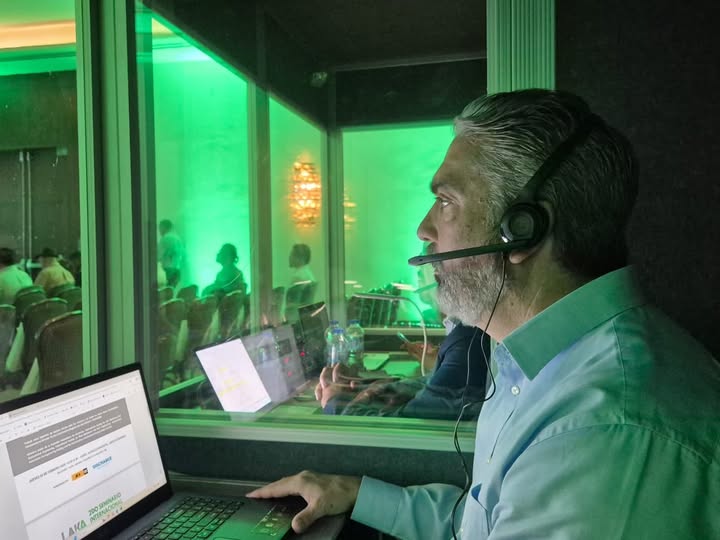
In the 1980s and 1990s, as tourism, diplomacy, and international investment expanded in the Dominican Republic, the demand for high-level multilingual communication grew rapidly. AIIC interpreters introduced international best practices in simultaneous and consecutive interpreting, standards for booth conditions, equipment, and team composition, and clear distinctions between professional conference interpreting and “ad-hoc bilingual mediation”.
2. Supporting the growth of key conference destinations
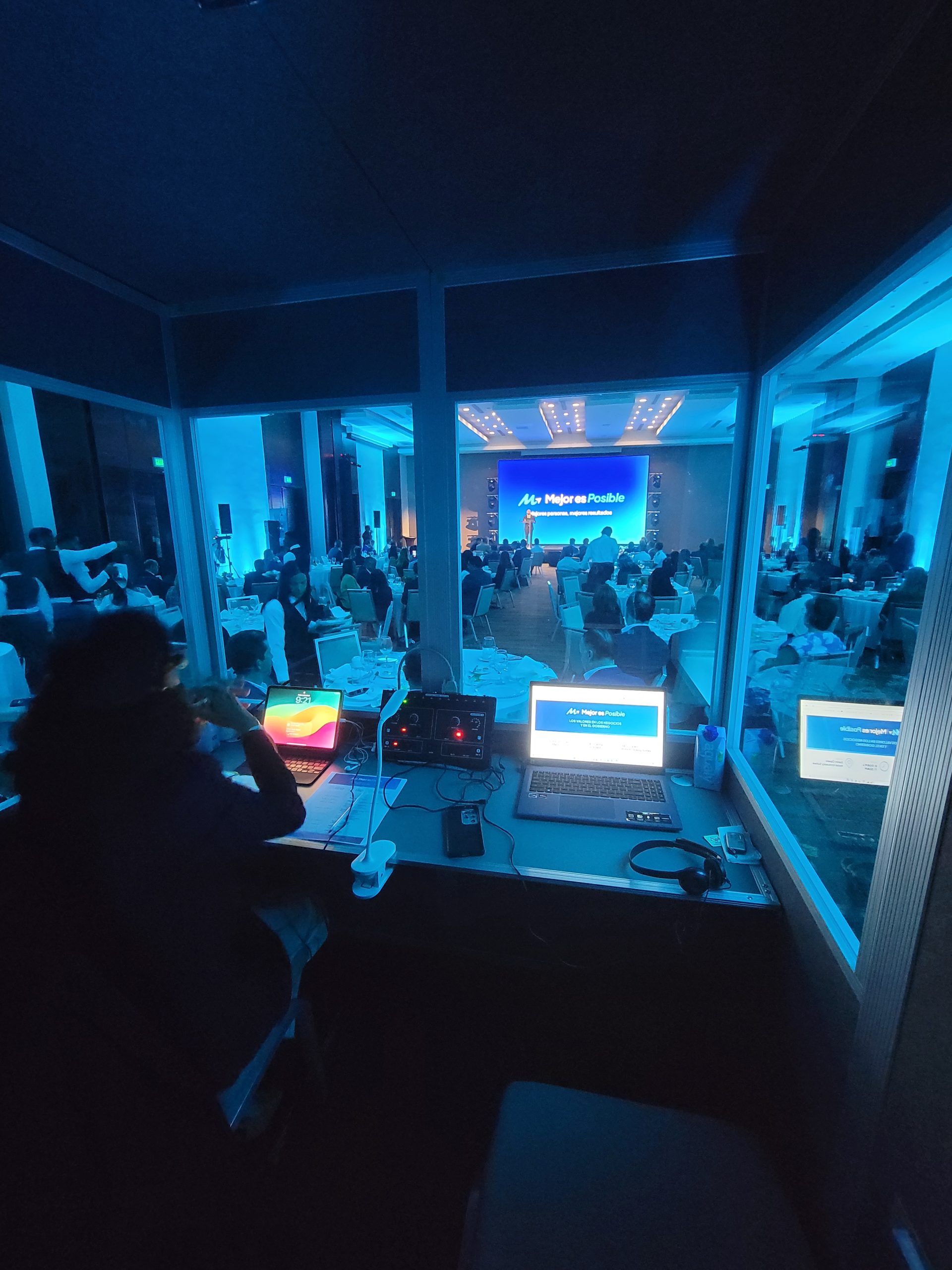
The pioneers of the profession in top destinations like Santo Domingo and Punta Cana were AIIC members Luis Huberto García, Jocelyn Caminero, Agnes Boonefaes, Claudia Pineda and Yvone Bellion. Other younger professionals like Robert McCollum, started their AIIC professional affiliation later in the 2000s. Also, Claude Hareau, who resided in the Dominican Republic for many years, is considered and esteemed member of the Dominican Republic professional interpreter team. Other AIIC members who regularly collaborate with the DR in organizing interpreter teams for larger multilanguage conferences and summits in the Dominican Republic include Estela Zaffaroni, Sharona Wolkowicz, Marjorie Robotham, Idette Swetye, Eric Maitrejean, Adnane Ettayebi, Francesca Lo Truglio and others. We are a team of 30-35 AIIC members residing in 10-12 cities of the Americas.
Currently there are 3 AIIC active members and associate members residing in the Dominican Republic: Agnes Boonefaes, Jocelyn Caminero and Robert McCollum.
AIIC interpreters have contributed to high-level international summits, medical congresses, corporate conventions and events hosted by multilateral organizations, developing the country’s reputation as a venue capable of hosting complex multilingual events.
Before hiring interpreters for your event in the Dominican Republic make sure you speak directly to a member of AIIC, or you run the risk of going through intermediaries who will get you “ad-hoc bilingual mediators” uncapable of rising to the level of your speakers. With poor rendition and lack of elegant delivery that will make your audience suffer and negatively impact on your reputation as a conference organizer.
3. Protecting the profession and working conditions
AIIC members have promoted fair remuneration, proper technical standards, and ethical practices, fighting to prevent the erosion of the profession. Not an easy task as unethical intermediaries proliferate in hotels sales departments, conference centers, audio-visual companies, government proxies, etc.
4. Mentorship and knowledge transfer
They have trained and mentored new generations of interpreters, building a sustainable local community.
5. Global connection
Through AIIC, Dominican interpreters remain connected to a global network, ensuring alignment with international standards, and access to an extensive pool of professionals to strengthen local teams when necessary.
Conclusion
AIIC represents a global guarantor of quality, ethics, and excellence. In the Dominican Republic, its members have played a transformative role over the past four decades and will continue to do so for years to come.